Decide which applications to modernize—and in what order.
Compare up to eight applications by value, change pressure, and execution complexity to set 7R directions, transition waves, prerequisites, and a 90-day plan.
Plan the portfolio sequence—not one isolated cost estimate
When several applications compete for attention, the first question is not a precise cost. It is what to verify first and where to create a controlled win. The planner compares every application on the same evidence scale and creates a reviewable decision draft.
- 01DIRECTION
- A directional choice across retain, retire, replace, rehost, replatform, refactor, and rearchitect
- 02SEQUENCE
- Wave 1, 2, 3, or hold using business value, risk, and execution complexity together
- 03NEXT 90 DAYS
- Evidence to verify before commitment and a strategy-specific 30, 60, and 90-day outline
Compare up to eight applications with the same questions
Rather than producing a number that looks certain, the result keeps the evidence level, decision drivers, and prerequisites visible.
The score exposes the verification sequence; it does not make the decision
- 01Unit
- One application or a clear system boundary that is deployed and operated together. Do not mix unrelated scopes in one entry.
- 02Value and pressure
- Business criticality, differentiation, and change demand are separated from change friction, operating risk, and lifecycle risk.
- 03Execution complexity
- Coupling, data transition complexity, and team readiness identify high-scoring candidates that still need preparation.
- 047R direction
- AWS 7R is used as a decision vocabulary. The automated result is a hypothesis, not architecture approval or vendor selection.
- 05Data handling
- Application names and selections are calculated only in this browser. There is no server storage, account, or result email.
- 06Limits
- Budget, regulation, contracts, organizational constraints, and real dependencies require validation. The result is not a quote or delivery schedule.
Read the assessment method with real transition conditions
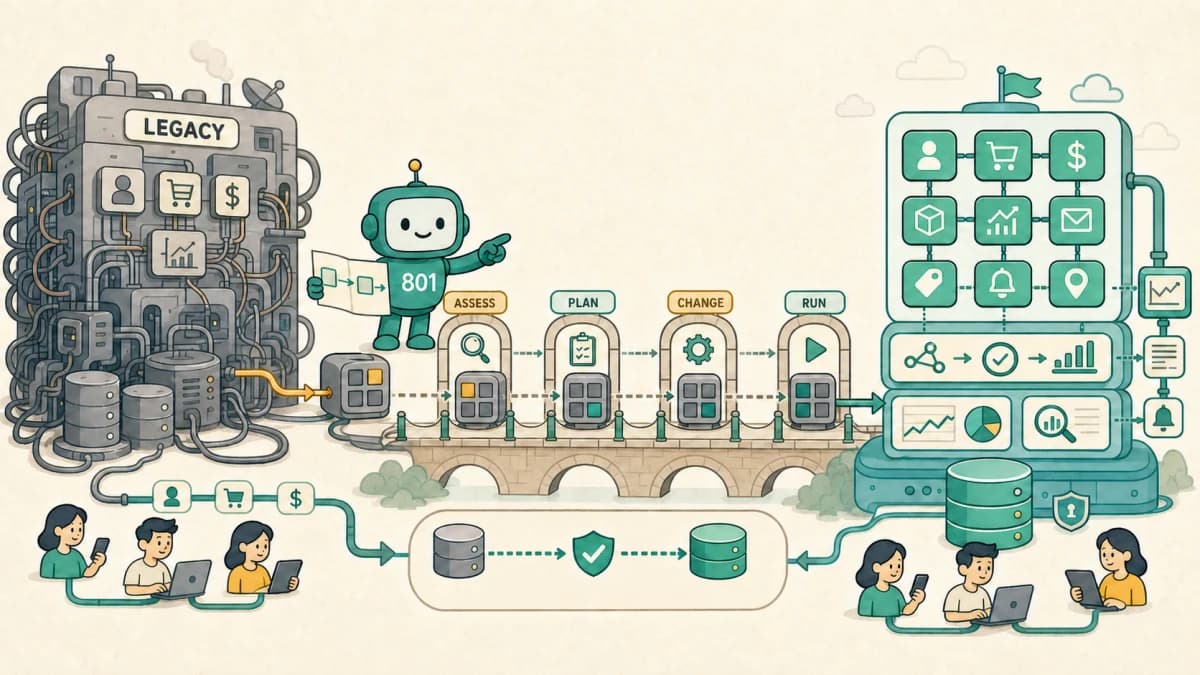 Where should application modernization start? Map the transition before the rewriteApplication Modernization · July 18, 2026A practical guide to modernizing legacy applications without a big-bang rewrite: assess the current estate, choose retain, replace, replatform, refactor, or rearchitect, then design phased cutover and outcome metrics.→
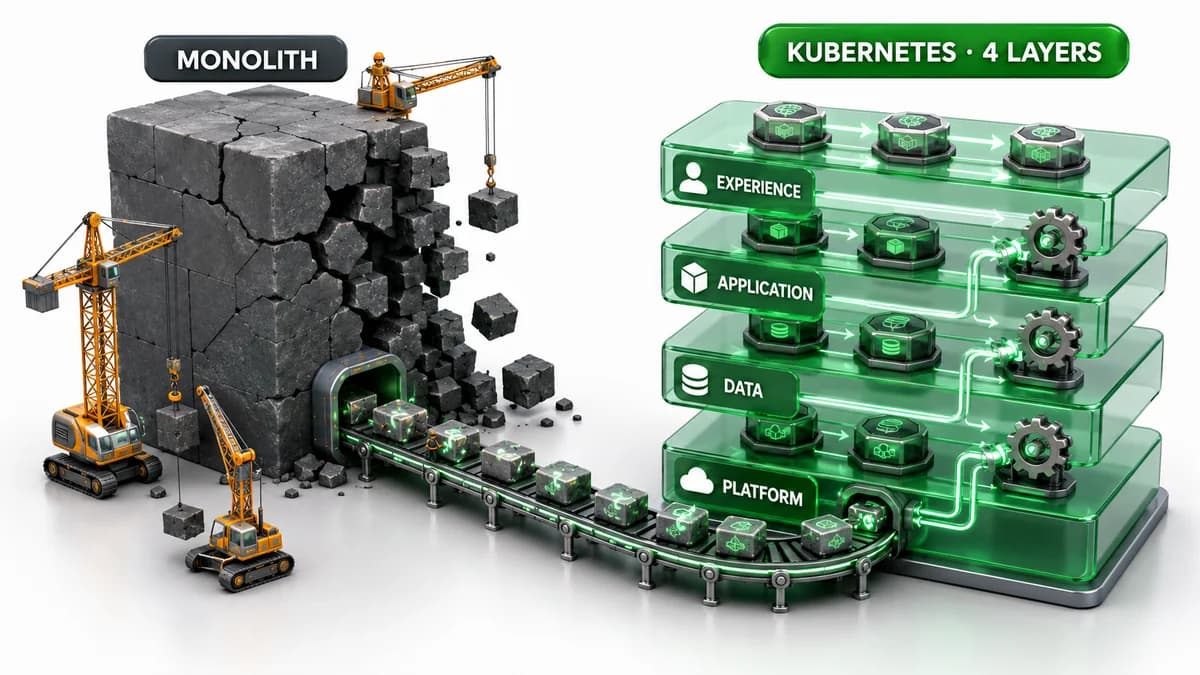 From a monolith to NKS: rebuilding the stack in four layersApplication Modernization · Updated July 16, 2026We moved a service locked into a single deployment and external CI onto NKS on Naver Cloud. How we split it into infrastructure, DB, API, and frontend — and made Git the single source of truth with Terraform, managed Cloud DB, and ArgoCD GitOps.→
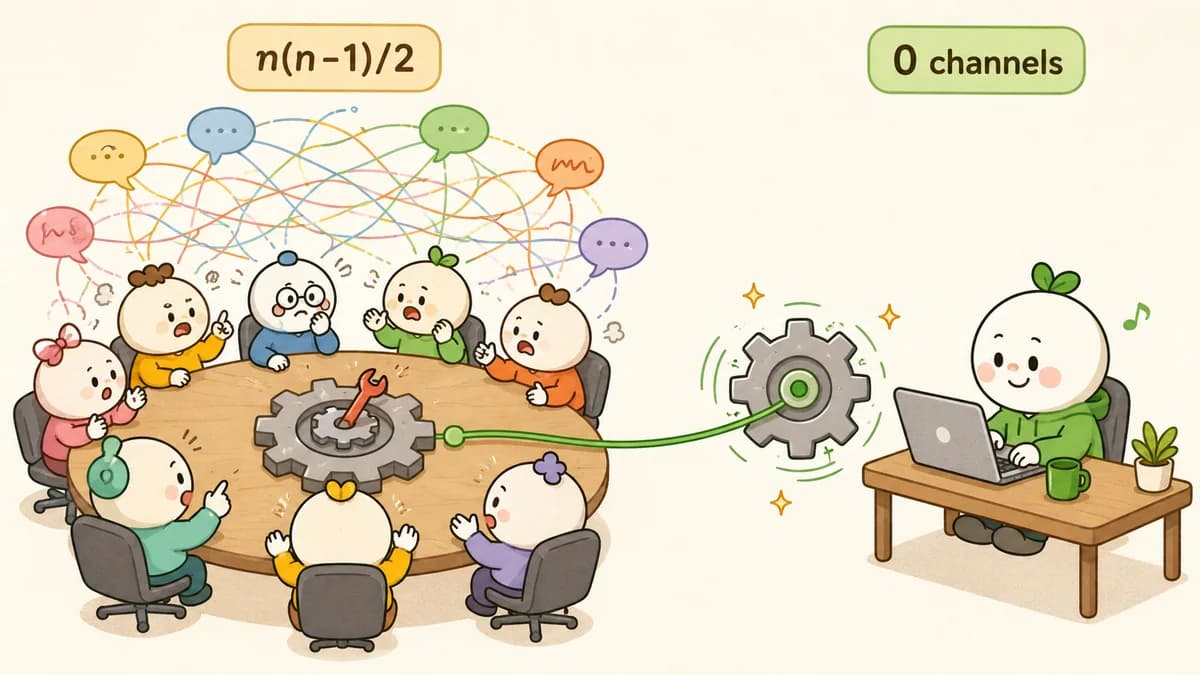 Why did one person fix in three days what eight people couldn't?Application Modernization · Updated July 16, 2026An eight-person SI project ended with core issues unsolved; alone, I fixed them in three days. Talent alone does not explain the gap, so I examine communication paths, diffused responsibility, decision structure, and the ownership gaps around re-architecture.→
Application modernization in practice
App modernization that made operations safer and leaner
Modernized an aging monolith with zero downtime, turning it into an operation that's resilient to failure and fast to deploy.
Turn the directional result into a real transition map.
Validate dependencies, data, and operating baselines to define the first wave and its success conditions.