● Finance·fintech
Cost & performance turnaround on an undocumented legacy system
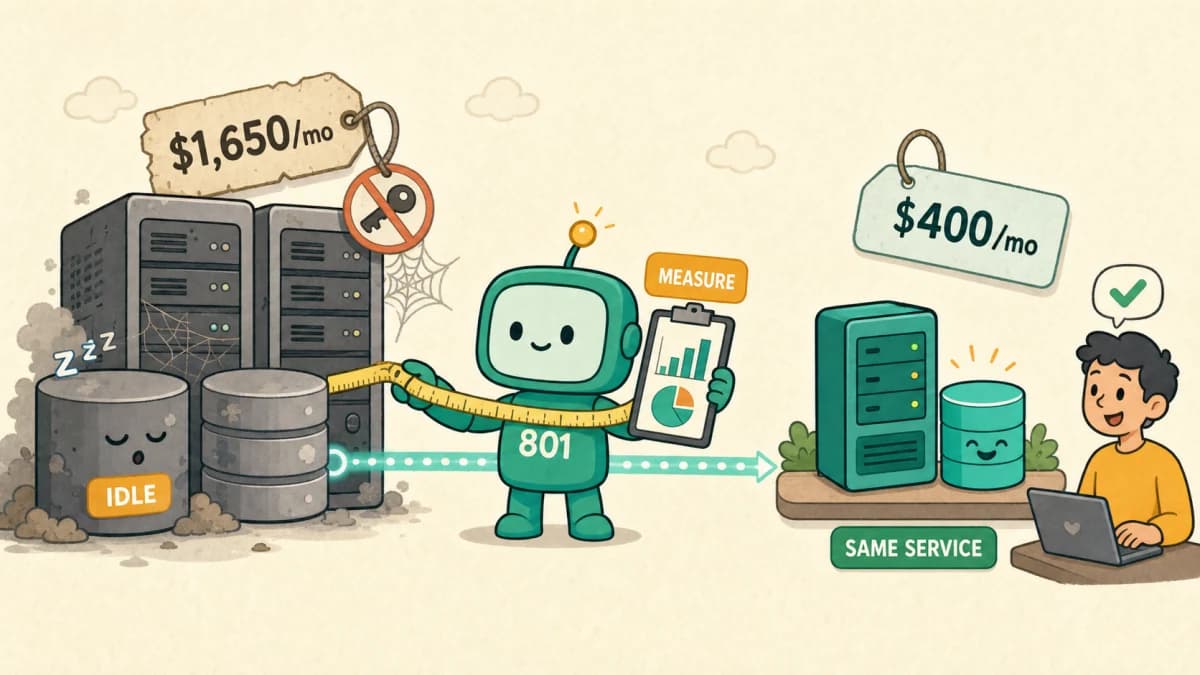
Reverse-engineered a system whose owners had left and whose docs were gone, then stopped the cost leaks and bottlenecks.
−76%
monthly infra cost
3×
response speed
architecture map
legacy restored
● THE CHALLENGE
Why it was hard.
Years of staff turnover left a system nobody fully understood in production. There were no docs, and with no idea what a change might break, both cost and performance were left untouched. The bill grew every month, yet where it leaked was unclear.
Constraints
- Analyze without any downtime
- No docs or owners — reverse engineering was a given
- Cutting cost without root cause risks outages
● OUR APPROACH
What we did.
- Measure & reverse-engineerTrace traffic, billing, and dependencies to rebuild the real structure
- Find bottlenecks & leaksQuantify cost drivers and performance bottlenecks
- Safe improvementNarrow blast radius, resize and rebuild in stages
- Docs & guardrailsLeave an architecture map and cost guardrails to prevent recurrence
● OUTCOME
Outcome.
Reverse engineering redrew the scattered system, clearing the leaks and unblocking bottlenecks. Monthly infrastructure cost fell 76%, from about $1,650 to $400, while response times improved — and we left structure docs the next person can actually read.
● RELATED INSIGHT
The detailed record, from diagnosis through execution.
● STACK
Stack.
AWSCloudWatchCost ExplorerTerraformObservability
● RELATED CASES
More work from this service.
- ↳H100 GPU self-service orchestration portalMajor university hospital · healthcareTurned a manually-coordinated H100 cluster into a Kueue self-service portal. 2× utilization, 18 months zero downtime.→
- ↳Root-cause analysis of a DDoS·breach and a rebuilt defense systemE-commerce·gamingPinned down the root cause of DDoS·hacking attempts and rebuilt the defense, from detection through response.→
● RELATED SERVICE
Explore Cloud & Infrastructure →Got a similar challenge? Let's talk it through, case in hand.
In 30 minutes we'll pin down what matches and what differs.
● Already trusted by teams across finance · healthcare · media · public